
Process Mining and Predictive Automation: Unleashing the Next Wave of Business Efficiency
Explore how organizations use process mining and predictive automation to detect inefficiencies, anticipate problems, and continuously optimize operations.
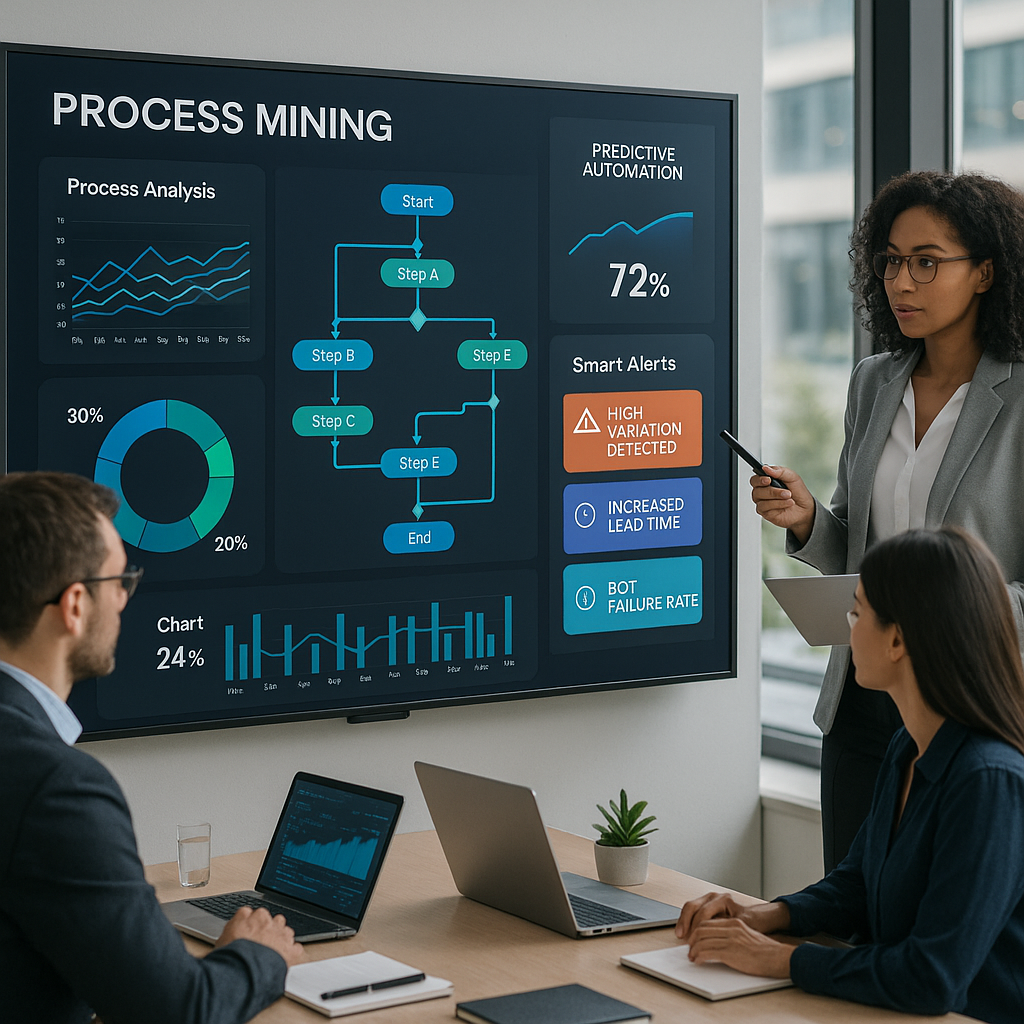
In 2025, organizations striving for operational excellence have a new set of tools to turn mountains of data into actionable insights. Process mining—a method that digs deep into operational systems—shines a light on how work truly happens, exposing inefficiencies and bottlenecks that might go unnoticed. Coupled with predictive automation, which uses real-time analytics to forecast and preempt issues, organizations can transform processes from reactive to proactive.
The Value of Process Mining in Modern Enterprises
Process mining is emerging as a strategic necessity, not just a technical improvement. By tapping into event logs from systems like ERP, CRM, and HR platforms, organizations can:
- Identify hidden inefficiencies: Reveal process variants, delays, and redundant steps.
- Spot best practices: Benchmark effective teams or workflows and scale improvements.
- Discover automation opportunities: Pinpoint manual, repetitive, or error-prone tasks ready for robotic process automation (RPA).
A 2025 Gartner report highlights that over 60% of enterprises have invested in process mining, finding ROI within the first year due to enhanced visibility and targeted optimization efforts.
Predictive Automation: Moving from Insight to Intelligent Action
Predictive automation is the logical evolution for data-driven organizations. Here's how it works:
- Real-time monitoring: Process mining dashboards continuously analyze live data, detecting anomalies or patterns.
- Issue anticipation: AI models forecast likely process breakdowns, compliance risks, or backlogs before they become critical.
- Automated response: Integrations trigger remediation—such as reallocating resources, sending alerts, or even auto-resolving known issues.
For example, a supply chain platform may detect an incoming shipment delay based on predictive analytics, automatically reroute orders, and notify customers, sparing businesses from costly disruptions.
Use Cases: Where Process Mining and Predictive Automation Deliver Value
- Finance Operations: Banks use process mining to flag slow loan approvals, while predictive triggers reprioritize workloads to prevent SLA breaches.
- Customer Service: Telecom firms analyze call center logs to identify bottlenecks and use automation to route queries, reducing wait times.
- Manufacturing: Factories monitor production data, predicting equipment failures and activating maintenance protocols before breakdowns occur.
Getting Started: Best Practices for Leaders
- Map your data landscape: Ensure operational systems log the necessary events to feed your process mining tools.
- Start with high-impact areas: Target processes tied to revenue, compliance, or customer satisfaction.
- Iterate and scale: Begin with pilot programs, learn quickly, and expand successful practices organization-wide.
- Foster a data-driven culture: Train staff to interpret process mining insights and champion automation.
Looking Ahead: Business Agility in the Predictive Era
As process mining and predictive automation converge, enterprises gain a potent advantage—anticipating challenges and acting swiftly, often before end-users are even aware of potential issues. For leaders, investing in these approaches isn't just about efficiency—it's about building organizations adaptive enough to thrive in a fast-moving digital world.
Ready to unlock new levels of operational intelligence? The journey starts with visibility—and accelerates with automation.